
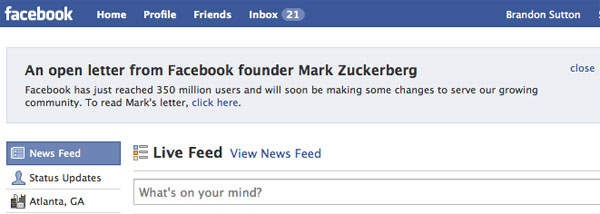
Is Mark Zuckerberg opening up and drinking the proverbial social Kool-Aid finally? I saw something earlier for the first time that I can ever remember since becoming a Facebook member – a prominent message/open letter from the Facebook founder explaining some upcoming changes to the service BEFORE they are implemented. How many times have we seen Facebook implement changes unexpectedly only to watch the entire community go into a meltdown over it? Is Facebook finally getting the fact that if they involve the community during the stages leading up to a change, they will likely encounter a lot less resistance? I sure hope so.
 This is one of the things that I think MySpace did a better job of, frankly. I remember quite often seeing notices from Tom on my home page explaining changes to the service or feature set. There was some comfort in knowing that we were all connected and even the founder of the site had an open discussion with the community. In some respects Facebook has operated more like Apple and less like Google or Dell in that respect – you’ll take what we give you and like it, dammit! 😉 Luckily, like Apple, Facebook usually gets it right in the end. But it is nice to see a different approach being taken. I’m sure we all remember many a fiasco when Facebook made unexpected changes in the past. Beacon comes to mind. So does the News Feed actually. And of course, the debacle over the rights to content on the site.
Bottom line – by keeping the community up to speed and making it prominent on the home page, they are sending a signal that they are listening and adapting to the reality that the huge user base is not to be taken for granted. As Brian Solis points out in his latest blog entry, there are signs that some of the crowd that were early adopters of Facebook are losing interest and spending less time on the site. Facebook must pay attention to this and respect the changing needs and desires of this dynamic audience. If you have a couple of minutes, I recommend you check out Brian’s post – there is a lot to chew on in the post and in the comments. This is a great topic for Marketers as they look forward to 2010.
What do you think? Does the open letter signal a shift in Mark Zuckerberg’s attitude toward engaging the community?

